

Are you tired of relying on pharmaceuticals for everyday health issues? What if there was a more natural way to alleviate common complaints without harsh side effects?
Natural remedies have been used for centuries to treat various health issues, offering a gentler alternative to conventional medicine. In today’s fast-paced world, it’s easy to overlook the simple, effective solutions that nature provides.
As we explore the world of herbal remedies, you’ll discover how these natural solutions can be easily incorporated into your daily life to promote well-being and prevent common ailments.
Key Takeaways
Table of Contents
- Natural remedies offer a gentler alternative to conventional medicine.
- Herbal remedies have been used for centuries to treat various health issues.
- Incorporating natural solutions into your daily life can promote well-being.
- Simple, effective natural remedies are available for common ailments.
- Using herbal remedies can help prevent everyday health issues.
The Power of Nature’s Medicine Cabinet
For centuries, humans have turned to nature’s medicine cabinet for relief from various health issues. The concept is simple: plants and natural substances hold the key to health and wellness. This approach to health is rooted in holistic healing principles, focusing on treating the whole person, not just the symptoms.
Understanding Herbal Medicine Traditions
Herbal medicine traditions date back thousands of years, with roots in ancient cultures. These traditions have been passed down through generations, with each culture contributing its unique understanding of the healing properties of plants. As noted by experts, “Herbal medicine is not just about treating ailments; it’s about understanding the intricate balance between nature and human health.”
Benefits of Using Natural Remedies
Using natural remedies offers several benefits, including reduced side effects and a more sustainable approach to health. Natural remedies work in harmony with the body’s natural processes, promoting alternative medicine approaches that are gaining popularity worldwide. By choosing natural remedies, individuals can take a proactive role in their health and wellness.
Herbal Remedies for Common Ailments: An Overview
Herbal remedies provide a holistic approach to health, allowing individuals to treat common ailments in a more natural and less invasive way. By incorporating herbal supplements and treatments into one’s health regimen, individuals can potentially reduce their reliance on pharmaceuticals and mitigate side effects.
Creating a home herbal pharmacy is a practical first step in utilizing herbal remedies. This involves selecting a variety of herbs known for their medicinal properties and preparing them in forms that are easy to consume, such as teas, tinctures, or capsules.
Building Your Home Herbal Pharmacy
To build a home herbal pharmacy, start by identifying the most common ailments you wish to address, such as digestive issues or stress. Then, research the herbs that are most effective for these conditions. Some must-have herbs include echinacea for immune support, peppermint for digestive issues, and chamomile for relaxation.
Must-Have Herbs and Their Properties
Certain herbs are particularly versatile and beneficial, making them staples in any herbal pharmacy. For instance, ginger is known for its anti-inflammatory properties and can be used to alleviate nausea and digestive discomfort. Other essential herbs include turmeric, with its potent anti-inflammatory compound curcumin, and valerian root, which is used for promoting relaxation and improving sleep quality.
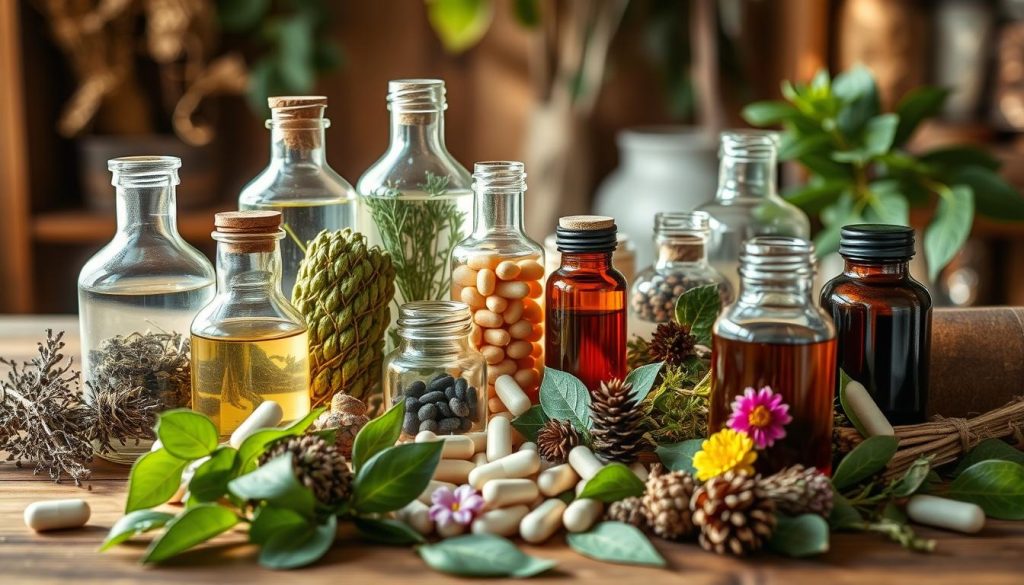
By understanding the properties of these herbs and how to use them effectively, individuals can create a comprehensive herbal medicine cabinet that supports overall health and well-being.
Herbal Solutions for Digestive Problems
Digestive issues are a common problem that can be effectively addressed with the help of medicinal herbs. These natural remedies have been used for centuries to alleviate various digestive complaints.
Remedies for Indigestion and Bloating
Indigestion and bloating are uncomfortable conditions that can be soothed with herbal remedies. Ginger and peppermint are two herbs known for their ability to ease indigestion. Ginger has natural anti-inflammatory properties, while peppermint oil can help relax the muscles in the stomach.
To make a simple remedy, you can steep fresh ginger in hot water to make a tea or inhale peppermint oil to calm the digestive system.
Herbs for Nausea and Stomach Upset
Nausea and stomach upset can be debilitating. Herbs like ginger and chamomile are effective in calming the stomach. Ginger works by reducing inflammation, while chamomile has a soothing effect on the digestive tract.
Preparing a warm tea with dried chamomile flowers or drinking ginger tea can provide quick relief from nausea.
Natural Solutions for Constipation
Constipation is another common digestive issue that can be addressed with herbal remedies. Psyllium husk and flaxseed are high in fiber, helping to promote regular bowel movements. Drinking plenty of water and consuming these herbs can help prevent constipation.
Mixing psyllium husk with water or adding ground flaxseed to your meals can help regulate your digestive system.
Natural Relief for Pain and Inflammation
Nature has provided us with numerous remedies to alleviate pain and reduce inflammation. For centuries, herbal remedies have been used to treat various ailments, including pain and inflammation. These natural solutions offer a gentler alternative to conventional pain relief medications.

Anti-Inflammatory Herbs and Their Applications
Certain herbs are renowned for their anti-inflammatory properties. Turmeric, for instance, contains curcumin, a compound known for its potent anti-inflammatory effects. Ginger is another herb that has been used to reduce inflammation and alleviate pain.
“The use of herbal remedies for pain relief is a tradition that spans centuries, offering a natural alternative to synthetic medications.”
Herbal Pain Relief for Headaches and Migraines
Herbs like feverfew and willow bark have been traditionally used to relieve headaches and migraines. Feverfew, in particular, is known for its ability to reduce the frequency and severity of migraine attacks.
Plant-Based Solutions for Joint and Muscle Pain
Arnica and devil’s claw are two herbs that have been used to relieve joint and muscle pain. Arnica is often used topically in creams and ointments to reduce inflammation and alleviate pain.
| Herb | Application | Benefit |
|---|---|---|
| Turmeric | Oral consumption | Reduces inflammation |
| Feverfew | Oral consumption | Relieves migraines |
| Arnica | Topical application | Relieves joint and muscle pain |
Herbal Approaches to Stress and Sleep Issues
Nature has provided us with a variety of herbs that can help alleviate stress and promote a good night’s sleep. In today’s world, where stress and sleep disorders are increasingly common, turning to herbal remedies can be a gentle yet effective way to find relief.
Calming Herbs for Anxiety and Stress
Certain herbs are renowned for their calming effects. Ashwagandha is an adaptogen that helps the body resist stress, promoting a sense of calm. Lavender, known for its soothing properties, can be used in teas or as an essential oil in aromatherapy to reduce anxiety.
“The right herb can be a powerful ally in managing stress and anxiety.”
Natural Sleep Aids from the Plant World
For those struggling with sleep, herbs like Chamomile and Valerian root can be beneficial. Chamomile tea, with its mild sedative effect, can help individuals relax before bedtime. Valerian root, known for its ability to improve sleep quality, is often consumed as a supplement or tea.
| Herb | Benefit | Common Use |
|---|---|---|
| Ashwagandha | Reduces stress | Supplement, Tea |
| Lavender | Promotes relaxation | Aromatherapy, Tea |
| Chamomile | Improves sleep | Tea |
| Valerian Root | Enhances sleep quality | Supplement, Tea |
Creating Relaxing Herbal Blends
Combining different herbs can create powerful blends tailored to individual needs. For example, mixing lavender and chamomile can enhance their relaxing properties, promoting a restful night’s sleep. Experimenting with various herbal combinations can help you find what works best for you.
By incorporating these herbal approaches into your daily routine, you can take a proactive step towards managing stress and improving sleep quality.
How to Prepare and Use Herbal Remedies Safely
The world of alternative medicine is vast, and preparing herbal remedies safely is key to benefiting from them. Herbal supplements can be a wonderful addition to your health regimen when used correctly.
Making Teas, Tinctures, and Infusions
Herbal teas, tinctures, and infusions are popular ways to consume herbal remedies. Each method has its own preparation technique.
Step-by-Step Tea Preparation
To make a herbal tea, start by boiling water and pouring it over your chosen herbs. Let it steep for 5-10 minutes, depending on the herb. Strain and enjoy.
Creating Effective Tinctures
Tinctures are concentrated herbal extracts. To make one, combine herbs with a solvent like alcohol or glycerin in a jar. Store it in a cool, dark place for 2-4 weeks, shaking daily.
Proper Dosage and Administration
Understanding the correct dosage is crucial. Start with a small amount and gradually increase as needed. Always consult with a healthcare professional, especially if you’re on medication.

Storage and Shelf Life of Herbal Preparations
Store herbal preparations in a cool, dry place, away from direct sunlight. Check for signs of spoilage before use. Most herbal teas and infusions have a short shelf life, while tinctures can last longer.
By following these guidelines, you can safely enjoy the benefits of herbal remedies.
Conclusion: Embracing the Healing Power of Herbs
As we explore the vast world of herbal remedies, it becomes clear that nature has provided us with a treasure trove of medicinal herbs to promote health and wellness. By incorporating herbal treatments into our daily lives, we can take a proactive approach to managing common ailments and improving our overall quality of life.
The use of medicinal herbs offers a natural and often effective alternative to conventional treatments. From soothing digestive issues to alleviating stress and promoting restful sleep, the benefits of herbal remedies are vast and varied. By understanding how to prepare and use these herbs safely, individuals can empower themselves to take control of their health.
As highlighted in the preceding sections, various herbs possess unique properties that make them ideal for addressing specific health concerns. By building a home herbal pharmacy and experimenting with different herbal treatments, individuals can discover the healing power of herbs firsthand. Embracing the world of medicinal herbs can lead to a more holistic approach to health, fostering a deeper connection with nature and promoting overall well-being.
FAQ
What are some common herbal remedies for digestive issues?
Herbal remedies like peppermint, ginger, and chamomile can help alleviate digestive problems such as indigestion, bloating, and nausea. These herbs can be consumed as teas, tinctures, or added to food.
How can I use herbal remedies for pain relief?
Herbs like turmeric, willow bark, and arnica have anti-inflammatory and pain-relieving properties, making them effective for managing headaches, migraines, and joint pain. They can be used topically or consumed internally as teas or supplements.
Are herbal remedies safe to use?
Generally, herbal remedies are safe when used properly. However, it’s essential to follow proper preparation and dosage guidelines, and consult with a healthcare professional, especially if you’re pregnant, breastfeeding, or taking medications.
Can herbal remedies help with stress and sleep issues?
Yes, certain herbs like lavender, valerian root, and passionflower have a calming effect and can help alleviate stress and anxiety, promoting better sleep. They can be consumed as teas, tinctures, or added to bath water.
How do I prepare herbal teas?
To prepare herbal teas, steep 1-2 teaspoons of dried herbs in boiling water for 5-10 minutes. Strain and drink. You can adjust the amount of herbs and steeping time to your liking.
What are some must-have herbs for a home herbal pharmacy?
Some essential herbs to have in a home herbal pharmacy include calendula, echinacea, ginger, peppermint, and chamomile, which can be used to treat various common ailments, from wounds and colds to digestive issues.
Can I use herbal remedies in conjunction with conventional medicine?
While herbal remedies can be used alongside conventional medicine, it’s crucial to consult with a healthcare professional to avoid potential interactions or contraindications.
How do I store herbal preparations to maintain their potency?
Store herbal preparations in a cool, dry place, away from direct sunlight and moisture. Use airtight containers, and label them with the date and contents. This will help maintain their potency and shelf life.